
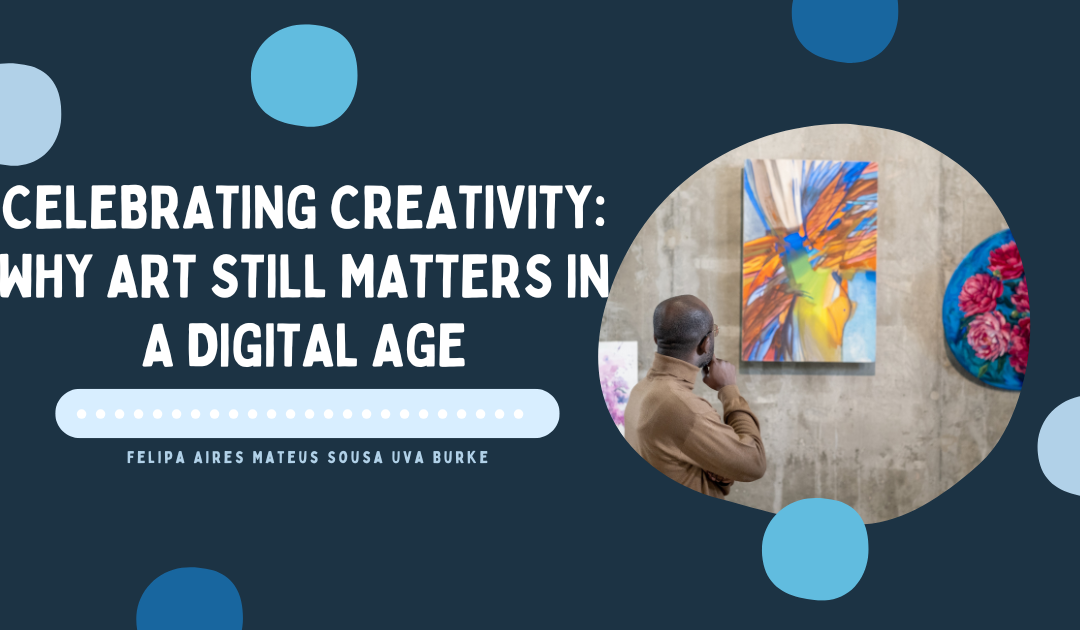
Celebrating Creativity: Why Art Still Matters in a Digital Age
We live in a world where technology shapes nearly every aspect of our lives. From the way we communicate to the way we work, learn, and even relax, the digital age has transformed our daily routines in remarkable ways. With artificial intelligence, virtual reality, and social media platforms pushing rapid innovation, it might seem like traditional forms of art—painting, music, dance, writing, and more—are becoming less central. But the truth is quite the opposite. Art not only remains relevant but plays a more vital role than ever in helping us stay grounded, connected, and human.
Creativity is the heartbeat of culture. It reflects our emotions, ideas, experiences, and identities. And even as technology evolves, the importance of artistic expression continues to grow. Here’s why art still matters—perhaps more deeply—within our digital world.
1. Art Helps Us Stay Human in a Fast-Paced Digital World
Technology can make life faster, louder, and more demanding. Endless notifications, digital multitasking, and constant connectivity often overload our minds. Amid this fast pace, art gives us a way to slow down, breathe, and reconnect with our emotions.
Whether it’s listening to a song that lifts your mood, watching a film that sparks introspection, or getting lost in a painting, art provides emotional release. It brings back human qualities like empathy, reflection, and imagination—things machines cannot fully replicate.
In a world where screens dominate our attention, art reminds us that we are more than data points—we are feeling, thinking individuals with rich inner lives.
2. Creativity Fuels Innovation
At first glance, creativity and technology may seem like opposites, but they actually depend on each other. Every breakthrough in tech—from smartphones to video games to digital design—begins with creative thinking.
Artistic skills such as storytelling, visual design, and problem-solving are essential in the digital industries that shape modern life. For example:
-
Designers rely on artistic principles to create intuitive apps.
-
Filmmakers and animators use creativity to craft immersive worlds.
-
Game developers blend art with tech to build engaging experiences.
The digital age didn’t eliminate the need for art—it expanded its influence.
3. Art Builds Community and Connection
Even though technology has made it easier to connect, many people feel more isolated than ever. Social media can create comparison, online work can reduce face-to-face interactions, and digital communication often lacks emotional depth.
Art helps bridge those gaps.
Community murals, music festivals, book clubs, theatre performances, and cultural events bring people together in shared experience. Even online spaces like digital galleries or live-streamed concerts allow us to connect deeply through creativity.
Art serves as a universal language that transcends age, background, and culture—creating unity in a world that can feel divided.
4. Art Preserves Culture and Tells Our Stories
As society becomes more global and fast-changing, preserving cultural identity becomes essential. Art captures the stories, traditions, and values that define who we are.
Through paintings, literature, dance, crafts, and even digital art, we pass down history to future generations. Creative expression ensures that diverse voices and experiences continue to be heard.
In the digital age, artists now have more platforms—from Instagram to YouTube to online portfolios—to share their stories. Instead of overshadowing traditional art, technology amplifies it, making it accessible to millions around the world.
5. Creative Activities Improve Mental Well-Being
Mental health challenges are on the rise, partly due to the pressures of modern technology—constant comparison, digital burnout, and information overload. Engaging in artistic activities provides a powerful antidote.
Research shows that creativity:
-
Reduces stress
-
Boosts mood
-
Enhances problem-solving skills
-
Improves focus
-
Encourages self-expression
Even simple activities like drawing, journaling, or crafting create a sense of calm and accomplishment. For children and adults alike, art offers a safe space to explore emotions and build resilience.
6. The Digital Age Has Created New Forms of Art
Far from replacing creativity, technology has opened the door to new art forms:
-
Digital illustration
-
3D modeling
-
Virtual reality art
-
Digital photography
-
Motion graphics
-
AI-assisted design
These innovations blur the line between art and tech, showing that creativity evolves rather than disappears.
Many artists now blend traditional and digital techniques, proving that art is adaptable and timeless. Creativity is a living force that grows with its environment.
7. Art Encourages Critical Thinking and Perspective
In an era of instant information, quick opinions, and fast media consumption, art encourages us to pause and think more deeply. A painting may spark reflection, a poem may shift perspective, a film may make us question assumptions.
Art challenges us to:
-
look beneath the surface
-
consider new viewpoints
-
develop empathy
-
understand complex ideas
These skills are crucial in a digital age filled with rapid content and competing narratives. Art enriches our minds by slowing things down and encouraging meaningful thought.
Conclusion: Art Is More Important Than Ever
The digital age has transformed our world, but it has not replaced the need for creativity. If anything, it has made art more essential. In a time of constant stimulation and rapid change, art grounds us, inspires us, connects us, and reminds us of our humanity.
Whether it appears on a canvas, a stage, a screen, or a digital platform, art continues to shape culture, spark innovation, and nurture the human spirit. That’s why celebrating creativity isn’t just a pastime—it’s a necessity.